ISA is a Danish National Facility where research is carried out over a wide range of the natural and life sciences,
including fundamental physics, material science, molecular biology and laboratory astrophysics, using accelerators and storage rings.
Access to ISA
Call for ISA proposals - Open!
There is currently an open call for proposals for beam time on ASTRID2. If you are interested in applying for beam time on one of the ASTRID2 beam lines please read the information
contained in the link below. The deadline for submission of proposals is the 3rd of November 2026.
With a special focus on users from EU widening countries, Ukraine and from countries without direct access to large scale research infrastructures in their country,
it is possible to apply for TNA through the Horizon Europe project NEPHEWS.
Applications for this support are accepted as part of ISA's annual call for proposals,
and is applicable for access to all facilities on ASTRID2
Research on ASTRID2
Latest News
May 2026
The Nephews project offers virtual training events for newcomers in the usage of large-scale Research Infrastructures.
Take part in an exclusive virtual training session focused on photon and neutron sources and their cutting-edge capabilities.
The two day virtual training available for NEPHEWS is an essential guide to new users. Some of the topics from previous virtual training events are repeated, with some of the materials
changed, but in this edition there are new topics on synchrotron based Small Angle X-ray Scattering (SAXS), an expanded
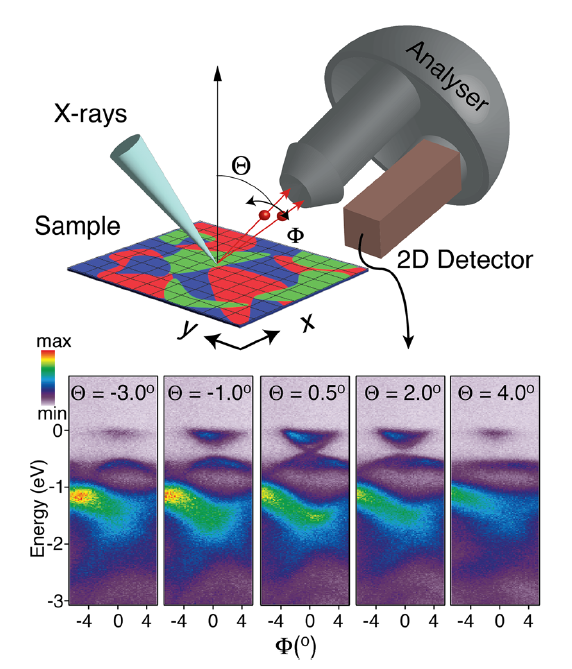
presentation on synchrotron based X-ray Photoemission Spectroscopy (XPS) inclusive of Ambient Pressure XPS (AP-XPS), and a Case study on Angle Resolved
Photoemission Spectroscopy (ARPES) of quantum materials. Further there is another Case study on High Pressure Science at the EuXFEL.
Repeated topics include an introduction on writing proposals for these photon and neutron research infrastructures, as well as a guide to the Synchrotron and
FEL Light Source and Neutron Facility landscapes in Europe.
When: Monday 11th May and Tuesday 12th May 2026 Where: Online via Zoom
To read more about this event, view the agenda and register to participate, visit the NEPHEWS website.
April 2026
On 22 April 2026, the inauguration of LEAPS AISBL took place at the Hanse Office in Brussels, marking an important step for Europe’s research and innovation landscape.
The formal establishment of LEAPS as an international association strengthens the coordination of Europe’s leading synchrotron and free-electron laser facilities and reinforces their role as a unified voice in European policy discussions.
The speeches and panel discussion, moderated by Maryline Fiaschi (Science|Business), brought together key representatives from policy, research and industry, including:
Maryam Blumenthal, Hamburg Senator for Science, Research, and Equality
Joanna Drake, Deputy Director-General DG RTD, European Commission
Manuel Heitor, Professor at University of Lisbon, Portugal’s former Minister of Science, Technology and Higher Education, Coordinator of the EC interim evaluation of Horizon Europe
Katarina Bjelke, Director General of the Swedish Research Council
Mark van de Kerkhof, Director EUV Research, ASML
Kristiaan Temst, Professor and Head of the Quantum Solid State Physics research unit at KU Leuven; Pathfinding for Semiconductor Technologies, imec, Leuven
Thomas Feurer, Chair of the LEAPS Board of Directors, Managing Director of the European XFEL; Professor at University of Bern.
The discussion focused on the role of research infrastructures in the context of FP10, global competition and Europe’s technological sovereignty.
A clear message emerged: research infrastructures are no longer peripheral—they are central to Europe’s competitiveness, innovation capacity and resilience. At the same time, several key challenges were highlighted:
the need for long-term and stable funding models aligned with infrastructure lifecycles,
stronger integration of science, industry and innovation ecosystems,
ensuring Europe can not only attract, but also retain top talent.
The creation of LEAPS AISBL provides a stronger framework to coordinate efforts across Europe and to contribute more effectively to shaping research and innovation policy.
The Rolling Call for TransNational Access (TNA) proposals for 2025-2026 is open.
The Call for TransNational Access (TNA) proposals for 2025-2026 is now open under a new rolling submission scheme!
The ReMade-TNA funding support represents a great opportunity for all scientists conducting circular economy research to benefit from a wide range of services including facility access, travel and accommodation support, and much more.
As a hub dedicated to developing new materials for a circular economy, ReMade@ARI provides scientists exploring the properties and structures of recyclable materials with coordinated access to more than 50 European analytical research infrastructures.
Under the new Rolling Call, proposals can be submitted at any time during the period September 2025 – May 2026, giving more flexibility and time to carefully prepare, develop, and refine research ideas.
However, analytical research infrastructures available within ReMade@ARI apply their own staggered closing dates. Please consult the Facility Schedule
- a key tool to track these deadlines and plan proposals submissions accordingly.
The first visit to ASTRID2 under the NEPHEWS Twinning programme has taken place.
We are pleased to announce the successful completion of a visit to the ASTRID2 synchrotron light source (operated by ISA at Aarhus University in Denmark) under the NEPHEWS Twinning
programme. The goal of this EU supported initiative is to “twin” experienced researchers with those who would like to learn, not only about a specific technique and how it may be applicable to their research, but also the
process involved in applying for and carrying out a successful beam time.
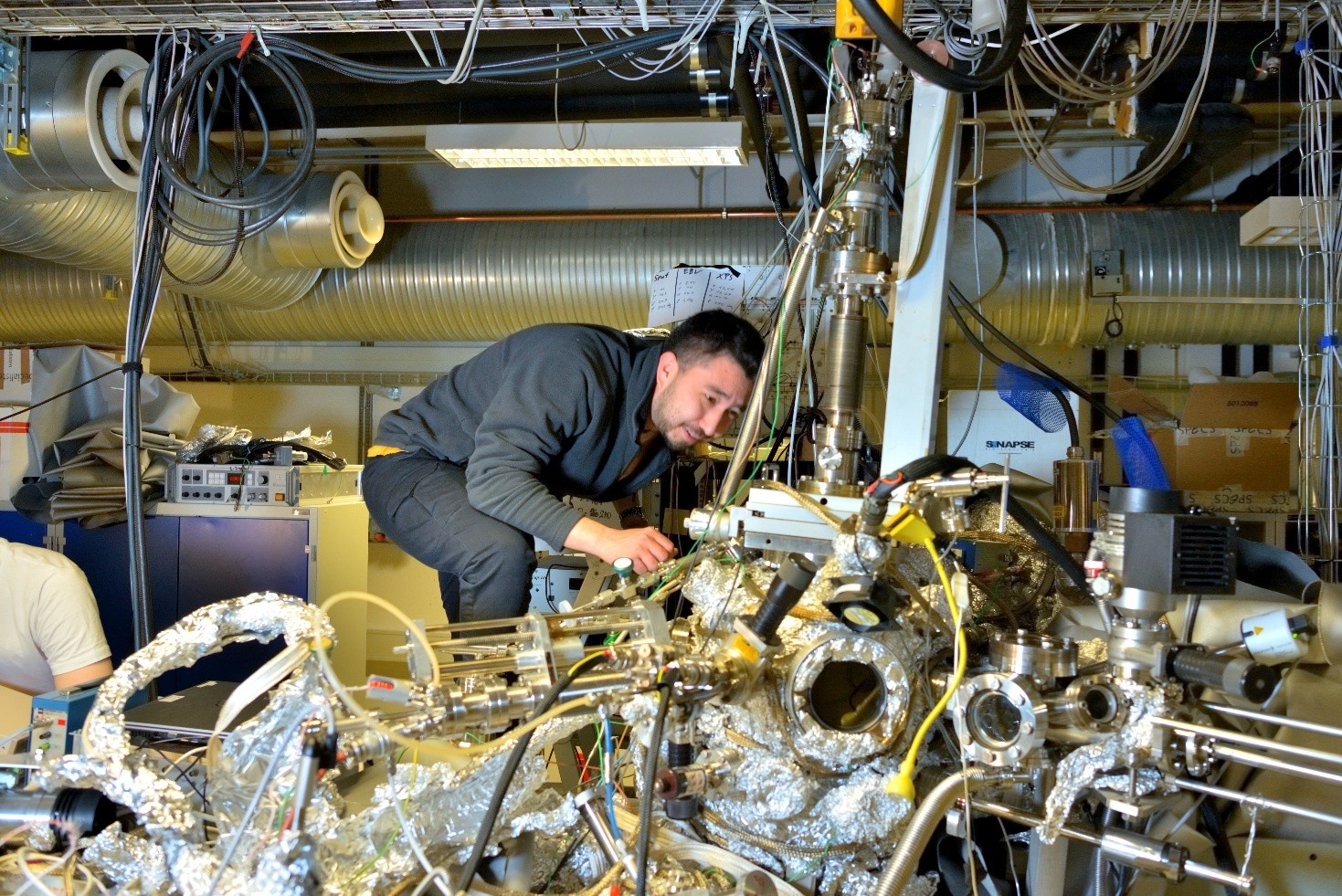
Under this programme, Dr Berkan Atman from Middle East Technical University in Ankara, Turkey, joined an experienced local group, whose project “Shifts of the Mg 2p, Si 2p, and O 1s core-levels as a function of
Mg-to-Si ratio in Mg Silicates on HOPG” had been awarded beamtime on MatLine. During the beam time, where Dr Atman was able to take on the role of a main operator of the experiments, the collaboration enabled advanced hands-on
training, data collection, and knowledge exchange, significantly enhancing the research capacity and fostering future cooperation between institutions. The project marks a meaningful step toward strengthening scientific excellence
and innovation through shared infrastructure and expertise and, importantly, improving accessibility to these research infrastructures.
May 2025
Circular Accelerator developments at IFA in the last 35+ years, by Søren Pape Møller
A personal story about the development of accelerators at IFA. Read about some of the history behind and the development of accelerator projects at the Department of Physics and
Astronomy, Aarhus University. From CERN experiments in the late 70's to the construction of ASTRID2 in the 2010's and lots in between.
In 2025 ASTRID2 provided 35 weeks of user beam time to the 6 operational beam lines, with normal operation at 180 mA top-up. Machine physics studies are ongoing in order to improve stability and lifetime of the beam.
In 2008 ISA was awarded money to build a new high brilliance synchrotron storage ring, ASTRID2. Construction of the ring began in 2011 and by April 2012 the whole ring was
under vacuum and ready for testing.
The first beam was injected into the ASTRID2 ring on
Monday 14th May 2012 and the first full turn of ASTRID2 was accomplished on Tuesday the 10th July 2012. On the 7th
of August electrons circulated the ring for almost 200 µs (1300 turns of the ring). On the 2nd of November
2012 a stored beam with RF was acheived for the first time. Commissioning of ASTRID2 proceeded well in 2013 and on the
13th of September 2013 200 mA of current was stored in ASTRID2 and top-up at 200 mA successful. In December 2013 the first external user came to do experiments on the AU-UV beam line.
2014 saw the commissioning of the AU-SGM3, AU-Matline and AU-CD beam lines, with all transferred beam lines fully operational by mid 2014. In early 2016 a brand new beam line, AMOLine, was commissioned.
The AU-SGM4 beamline (a modified version of hte I4 beam line from MaxLab), dedicated to nano- and micro-focussed Angle-Resolved Photoemission Spectroscopy (nanoARPES and microARPES) experiments, was commissioned in 2022.